
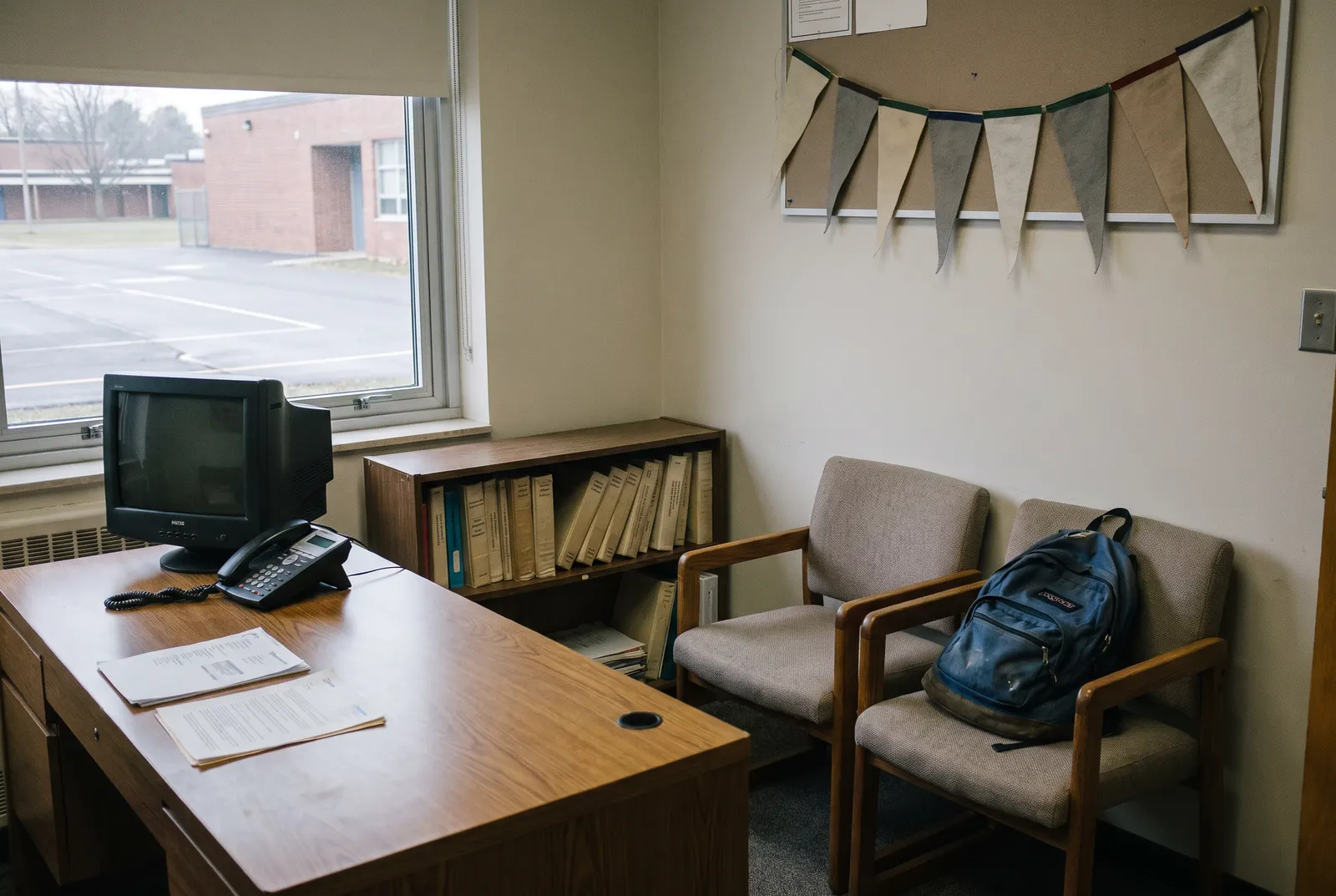
School and career counselors earn a national median salary of $64,330 per year ($30.93 hourly equivalent) and a $71,430 mean across 353,310 jobs in May 2025 BLS data for SOC 21-1012. Wages span $45,020 at the 10th percentile to $104,770 at the 90th percentile, and public K-12 counselors frequently earn that full annual pay on a 10-month school contract.
National School Counselor Wages and What SOC 21-1012 Measures
Check who sits inside BLS SOC 21-1012 first. The official federal title is Educational, Guidance, and Career Counselors and Advisors, covering 353,310 salaried workers across 51 jurisdictions.
| BLS Wage Benchmark (SOC 21-1012) | Annual Wage | Common Role Profile |
|---|---|---|
| 10th Percentile | $45,020 | Entry college academic advisors and small rural school districts |
| 25th Percentile | $51,270 | Early-step public K-12 counselors and university career coaches |
| National Median (50th Percentile) | $64,330 | Mid-career public school and higher-education counselors ($30.93/hr) |
| National Mean | $71,430 | Lifted by senior coastal and suburban K-12 district pay lanes |
| 75th Percentile | $82,870 | Experienced public school counselors in unionized metro districts |
| 90th Percentile | $104,770 | Top-step veteran K-12 counselors and district counseling leads |
Two very different employers share this code: public K-12 districts and colleges. That split explains the lower quartile.
Higher-education academic advisors and college career counselors work 12-month campus calendars on administrative staff pay bands that start closer to $45,020 or $51,270. Public K-12 school counselors usually sit on certified educator bargaining schedules with higher starting floors in well-funded metro districts and much higher late-career ceilings approaching $82,870 to $104,770.
By the Numbers
- $64,330 School and Career Counselor Median Pay
- $30.93 Median Hourly Wage
- 353,310 Jobs Nationwide
Source: BLS OEWS, May 2025
How 10-Month School Contracts Compare With 12-Month Clinical Agencies
School medians beat clinical medians on paper. SOC 21-1012 sits at $64,330 versus $59,350 for SOC 21-1018, and the entry floor runs higher too ($45,020 versus $38,940 at the 10th percentile).
Contract length widens that gap further.
Effective Pay per Working Day
BLS computes the $30.93 hourly median for SOC 21-1012 by dividing annual wages by a standard 2,080-hour work year. Public K-12 counselors rarely work 2,080 hours. Most work an academic calendar lasting roughly 10 months, with scheduled holiday breaks and summer recess built into the contract.
A clinical mental health counselor working at a 12-month community agency earns $59,350 (or $47,100 during associate years) while logging full year-round weeks with two or three weeks of paid time off. Per working day on the clock, a mid-career public school counselor in a strong district earns noticeably more than a salaried agency LPC at the same annual figure.
How District Step and Lane Schedules Raise Pay
Clinic raises depend on billing volume. Public school counselors work under published step-and-lane schedules negotiated by district bargaining units.
Your vertical “step” increases automatically for each year of district service. Your horizontal “lane” rises permanently when you earn additional graduate credits beyond a base master’s degree (such as MA+15 or MA+30). Download any district’s PDF pay table before applying to grad school to see your pay five and ten years out.
Pensions and Benefit Stability
Public districts add state pensions and subsidized health plans. You face zero insurance billing quotas, never lose income when a student skips, and never spend Sunday nights fighting denied claims.
Honest Trade-Offs Inside Public Schools
School counseling isn’t easy money. Student-to-counselor ratios in underfunded districts run heavy, pulling you into master scheduling and standardized testing administration rather than sustained weekly psychotherapy.
Pay ceilings stay rigid too. Hit the top step and top credit lane of a rural or mid-sized district, and your pay stalls at modest cost-of-living raises unless you move into administration or add outside clinical hours.
Top and Bottom States for School Counselor Pay
State education formulas and local property taxes drive huge geographic swings. Compare SOC 21-1012 against SOC 21-1018 inside the same state to see where schools beat clinics.
| Highest-Paying States (SOC 21-1012) | School Median | School 90th Percentile | Clinical Median (21-1018) | School Jobs |
|---|---|---|---|---|
| California | $86,500 | $136,660 | $59,250 | 45,140 |
| Alaska | $82,900 | $103,420 | $80,770 | 540 |
| Washington | $82,670 | $125,950 | $68,910 | 6,610 |
| District of Columbia | $80,470 | $113,620 | $60,450 | 1,690 |
| Massachusetts | $79,930 | $117,630 | $59,890 | 11,460 |
| New Jersey | $77,910 | $108,500 | $62,820 | 8,190 |
| New Mexico | $77,880 | $103,110 | $74,100 | 1,780 |
| Maryland | $75,820 | $116,650 | $59,530 | 6,600 |
| New York | $71,610 | $123,850 | $59,450 | 23,380 |
| Texas | $67,900 | $101,830 | $62,630 | 31,730 |
Coastal and Northeastern union districts outpay clinics decisively. California pairs strong pay with massive hiring volume across 45,140 school counselor jobs, an $86,500 median, and a $136,660 90th percentile compared with a $59,250 clinical median.
Massachusetts ($79,930 school versus $59,890 clinical), Washington ($82,670 versus $68,910), New Jersey ($77,910 versus $62,820), and New York ($71,610 median and $123,850 at the 90th percentile across 23,380 jobs) follow the same pattern. Even Louisiana shows a dramatic local gap: school counselors post a $61,870 median compared with $37,910 for clinical mental health counselors.
Several mid-tier states also give school counselors a steady edge over clinic wages. Virginia pays $67,660 for school counselors versus $59,880 for clinical counselors, Pennsylvania pays $60,880 versus $52,010, and Georgia pays $63,720 versus $58,960.
Other states flip the script completely.
| Lowest-Paying States (SOC 21-1012) | School Median | School 90th Percentile | Clinical Median (21-1018) | School Jobs |
|---|---|---|---|---|
| South Dakota | $51,830 | $65,990 | $53,650 | 1,000 |
| Oklahoma | $52,040 | $81,630 | $59,350 | 4,830 |
| Florida | $53,140 | $82,780 | $56,790 | 22,800 |
| West Virginia | $55,520 | $73,090 | $49,430 | 1,260 |
| Iowa | $56,540 | $77,110 | $60,880 | 3,690 |
| Kansas | $56,590 | $77,920 | $59,470 | 3,100 |
In Florida (22,800 school jobs), Oklahoma, Iowa, Arizona ($58,250 school versus $65,300 clinical), North Dakota ($58,960 versus $68,630), and Oregon ($66,690 versus $74,590), salaried clinical mental health counselors earn higher medians than school counselors. Check both columns for your home state first.
How Grade Level and District Size Shape School Pay
District size swings pay hard inside one state. Two counselors with identical licenses take home very different paychecks in a rural county versus a wealthy suburban district.
Local property tax bases drive district pay scales. That is why Illinois shows a $44,890 10th percentile alongside a $110,580 90th percentile, and Texas spans $42,380 at the 10th percentile to $101,830 at the 90th percentile across 31,730 jobs. Moving thirty minutes from a rural county line into a suburban high school district can raise your base salary far faster than waiting for annual step increases.
Grade level changes contract length too. Elementary and middle school counselors usually stay on the exact teacher-calendar contract, while high school counselors often receive extra paid days before and after the academic year to build class schedules and verify graduation credits.
Public Districts Versus Charter and Private Schools
School sector matters almost as much as district size. Unionized public school districts publish guaranteed step schedules and enroll counselors in state educator pension plans.
Private schools and non-union charter networks sometimes offer smaller caseloads or lighter bureaucracy, yet their base salaries frequently trail surrounding public districts and substitute 403(b) plans for defined-benefit state pensions. Compare total retirement value beside base salary.
Related Rankings
- School and CMHC Dual TrackMaster's programs combining clinical mental health counseling with school counseling pathways for K-12 and clinical licensure.
- Child and Adolescent CMHCClinical mental health counseling master's degrees offering child, adolescent, youth, or family-centered clinical concentrations.
- Best Online CMHC ProgramsOnline clinical mental health counseling master's programs ranked by real per-credit cost, CACREP accreditation, residencies, and outcomes.
- Public University CMHC ProgramsPublic university clinical mental health counseling master's degrees compared on in-state and out-of-state tuition, CACREP status, and outcomes.
Dual CMHC and School Counseling Degree Flexibility
Choosing between school and clinical tracks used to lock you in permanently. Today, counselor education departments increasingly align both tracks around a 60-semester-hour CACREP standard, making dual preparation far more practical.
A dual-track CMHC and school counseling program (or a 60-credit CMHC degree paired with a post-master’s school counseling certification sequence) creates real financial flexibility across your entire career.
Higher Initial District Pay Lane
Many public districts place legacy 48-credit school counseling graduates on the baseline Master’s lane. Graduating with a 60-credit CMHC degree or a dual-track degree with additional school certification coursework often places you directly into a Master’s+15 or Master’s+30 pay lane from year one, compounding your pensionable base salary every year thereafter.
Combining a 10-Month School Job With Private Clinical Practice
Counselors who hold both state school certification and an independent LPC or LMHC license open one of the most resilient hybrid models in mental health. Your 10-month school contract covers your core salary and state pension with family health insurance, while evening telehealth or summer private-practice sessions add flexible clinical income without full-time solo practice risk.
Career Pivot Insurance Without a Second Master’s
If district budget cuts or heavy non-counseling duties leave you ready to exit K-12 schools, an independent LPC license lets you move straight into outpatient clinics or hospital behavioral units. Going the reverse direction from a standalone school counseling degree without clinical diagnosis coursework often requires returning to school for extra credits before a state counseling board approves LPC hours.
Compare verified tuition among programs featured on our school and CMHC dual-track programs ranking.
| Verified Dual-Track Capable CMHC Program | State | Cost per Credit | Total Tuition | Delivery |
|---|---|---|---|---|
| Pennsylvania Western University | PA | $568 | $34,080 | Fully online |
| Colorado Christian University | CO | $698 | $41,880 | Online with onsite residencies |
| University of Holy Cross | LA | $780 | $46,800 | Fully online |
| Bradley University | IL | $1,158 | $69,480 | Online with onsite residencies |
Pennsylvania Western University bills $568 per credit ($34,080 total for 60 credits), well below the $45,090 median master’s tuition across all ranked CMHC programs. If your focus leans heavily toward youth therapy outside school buildings, compare specialized coursework on our child and adolescent counseling programs list too.
District Stipends and Higher-Education Advising Paths
Even if you stay strictly inside SOC 21-1012 without pursuing clinical LPC licensure, you have concrete ways to move above your state median toward the $82,870 75th percentile and $104,770 90th percentile.
Extended-Year Summer Days
High school counselors frequently receive extended-contract days in June and August to finalize master schedules and process senior transcripts. Those extra days pay out at your daily per-diem contract rate, lifting total annual income without adding solo business overhead.
Department Chair Stipends and District Leadership
Large public high schools attach annual stipends for head counselor duties or dual-enrollment coordination. Moving into a district-level Director of Student Services or Counseling Coordinator position shifts you onto administrative pay schedules that rise above building-level educator tables.
K-12 Versus College Advising Pay
Do not assume higher education pays better than K-12 schools. Unless you reach senior director levels in university student affairs, entry and mid-level college advising roles frequently pay less than unionized suburban high schools while requiring a full 12-month campus work calendar.
Deciding Between School Counseling and Clinical Mental Health
Your target state and your preferred day-to-day work should drive this choice.
Pick school counseling if you live in a strong public-school pay state such as California ($86,500) or Washington ($82,670), want predictable step-and-lane raises with a state pension, and enjoy academic planning alongside brief student support.
Pick clinical mental health counseling if you want deep weekly therapy with adults or families, live in a state where clinical medians beat school districts like Oregon ($74,590) or Arizona ($65,300), or want solo private-practice upside and Counseling Compact telehealth flexibility. To keep both doors open, review our mental health counselor salary and licensed professional counselor salary guides alongside dual-track CMHC tuition before choosing a school.
School and Career Counselor Pay by State
In May 2025, the Bureau of Labor Statistics reported a median annual wage of $64,330 for school and career counselor nationwide, with the middle half earning between $51,270 and $82,870. About 353,310 people held these jobs.
California had the highest published state median at $86,500, and South Dakota the lowest at $51,830. The table lists every state where BLS publishes a median for this occupation.
See the Wage Table for All 51 States
| State | Median | 10th Percentile | 90th Percentile | Jobs |
|---|---|---|---|---|
| California | $86,500 | $51,890 | $136,660 | 45,140 |
| Alaska | $82,900 | $50,870 | $103,420 | 540 |
| Washington | $82,670 | $57,980 | $125,950 | 6,610 |
| District of Columbia | $80,470 | $50,900 | $113,620 | 1,690 |
| Massachusetts | $79,930 | $59,460 | $117,630 | 11,460 |
| New Jersey | $77,910 | $57,850 | $108,500 | 8,190 |
| New Mexico | $77,880 | $46,660 | $103,110 | 1,780 |
| Maryland | $75,820 | $48,460 | $116,650 | 6,600 |
| Rhode Island | $75,000 | $49,100 | $102,340 | 1,340 |
| Delaware | $74,070 | $47,750 | $96,140 | 1,700 |
| Connecticut | $73,910 | $46,510 | $108,540 | 3,370 |
| New York | $71,610 | $46,100 | $123,850 | 23,380 |
| New Hampshire | $71,080 | $47,990 | $96,630 | 1,650 |
| Texas | $67,900 | $42,380 | $101,830 | 31,730 |
| Virginia | $67,660 | $45,700 | $103,380 | 9,450 |
| Nevada | $66,710 | $46,570 | $94,530 | 2,250 |
| Oregon | $66,690 | $50,190 | $119,780 | 3,990 |
| Colorado | $64,780 | $48,690 | $97,960 | 6,530 |
| Minnesota | $64,600 | $47,870 | $94,100 | 4,200 |
| Vermont | $64,570 | $50,810 | $94,010 | 1,120 |
| Kentucky | $64,350 | $40,840 | $99,390 | 5,030 |
| Georgia | $63,720 | $42,040 | $101,880 | 11,460 |
| Wyoming | $63,430 | $49,440 | $91,330 | 770 |
| Wisconsin | $62,690 | $47,470 | $86,510 | 5,330 |
| Nebraska | $62,500 | $45,050 | $100,160 | 2,190 |
| Illinois | $62,420 | $44,890 | $110,580 | 13,580 |
| Louisiana | $61,870 | $45,340 | $87,940 | 4,820 |
| Ohio | $61,760 | $43,010 | $99,810 | 13,250 |
| Hawaii | $61,730 | $49,350 | $93,720 | 1,620 |
| Utah | $61,320 | $37,260 | $101,780 | 4,070 |
| Pennsylvania | $60,880 | $46,200 | $97,810 | 13,570 |
| South Carolina | $60,340 | $39,800 | $86,250 | 6,460 |
| Idaho | $60,320 | $46,710 | $79,620 | 1,990 |
| Tennessee | $59,960 | $42,410 | $84,550 | 6,470 |
| Arkansas | $59,770 | $38,520 | $78,070 | 2,310 |
| Alabama | $59,570 | $37,670 | $78,570 | 4,410 |
| Michigan | $59,440 | $42,380 | $89,280 | 9,170 |
| Indiana | $59,260 | $41,180 | $82,690 | 5,610 |
| North Dakota | $58,960 | $46,860 | $79,500 | 840 |
| Mississippi | $58,710 | $38,580 | $76,610 | 2,620 |
| Maine | $58,630 | $45,300 | $82,460 | 1,780 |
| Arizona | $58,250 | $46,400 | $82,240 | 7,330 |
| Missouri | $58,040 | $41,890 | $78,740 | 8,890 |
| Montana | $57,900 | $39,180 | $87,610 | 890 |
| North Carolina | $57,630 | $40,400 | $74,070 | 9,430 |
| Kansas | $56,590 | $42,020 | $77,920 | 3,100 |
| Iowa | $56,540 | $43,470 | $77,110 | 3,690 |
| West Virginia | $55,520 | $37,940 | $73,090 | 1,260 |
| Florida | $53,140 | $38,290 | $82,780 | 22,800 |
| Oklahoma | $52,040 | $38,100 | $81,630 | 4,830 |
| South Dakota | $51,830 | $41,560 | $65,990 | 1,000 |
Frequently Asked Questions
What Is the Average School Counselor Salary in the United States?
Do School Counselors Make More Than Clinical Mental Health Counselors?
Do School Counselors Get Paid During Summer Break?
Does a 60-Credit CMHC Degree Put You in a Higher School Pay Lane?
Can You Work as Both a School Counselor and an LPC?
Keep Reading
 Mental Health Counselor SalaryMental health counselors earn a $59,350 national median in May 2025 BLS data. Compare state wage gaps and verified CMHC tuition ROI.
 LPC & LMHC SalaryLPC and LMHC wages track BLS SOC 21-1018 ($59,350 median, $97,590 90th percentile). Compare associate pay jumps against independent practice.
 LMFT SalaryMarriage and family therapists earn a $66,940 median and $123,730 at the 90th percentile in May 2025 BLS data. Compare LMFT pay against LPC wages.
- School and CMHC Dual TrackMaster's programs combining clinical mental health counseling with school counseling pathways for K-12 and clinical licensure.