
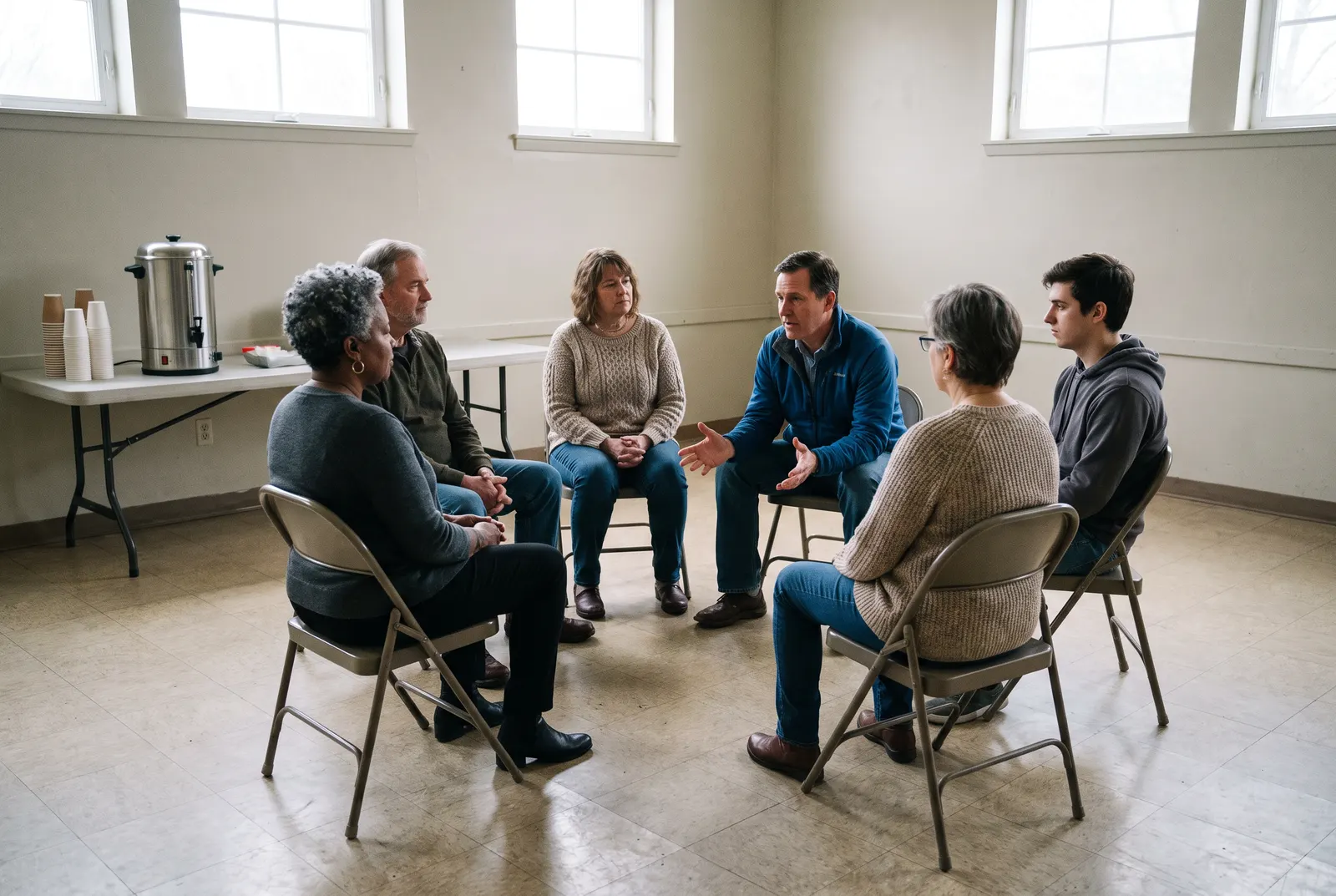
Figuring out how to become an addiction counselor comes down to choosing between two very different doors. You can enter residential or outpatient treatment quickly through a state alcohol-and-drug certificate, or you can earn a 60-credit clinical mental health counseling master’s degree with an addiction track so you can treat co-occurring disorders and practice independently.
Two Entry Doors Into Addiction Counseling
Most people researching substance use work hit an early point of confusion. One job posting asks for a bachelor’s degree plus a state drug-counselor certificate, while another demands a 60-credit master’s degree and an independent clinical license. Both postings are real. Addiction treatment splits sharply by credential tier.
| Pathway | Training Floor | Where You Can Work | Key Career Tradeoff |
|---|---|---|---|
| State Alcohol & Drug Credential (CADC / LCDC) | Certificate, associate, or bachelor’s plus state SUD hours | Detox facilities, residential rehabs, MAT clinics, state-funded agencies | Fastest entry with lower tuition, but capped scope on psychiatric diagnosis and private billing |
| Master’s-Level Dual Clinician (LPC / LMHC + LCADC) | 60-credit CMHC master’s, 700 graduate clinical hours, NCE or NCMHCE, plus 2,000 to 4,000 post-master’s hours | Hospitals, VA clinics, private practice, IOP leadership, dual-diagnosis centers | Longer upfront investment, but full diagnostic authority and higher long-term earning ceiling |
If you want to start working inside a recovery center within twelve months without graduate debt, a state alcohol and drug counselor track gets you into client care fast. Many behavioral health technicians and peer recovery specialists take that route first to test whether they enjoy high-intensity group work before paying for grad school.
Plan on a long behavioral health career, and that certificate ceiling shows up quickly. Health insurers push clinics to hire master’s-level clinicians who can treat major depression or post-traumatic stress right alongside alcohol or opioid dependence. Without a clinical master’s, you stay locked out of clinical director roles and solo private practice.
By the Numbers
- $59,350 Mental Health Counselor Median Pay
- $28.53 Median Hourly Wage
- 491,930 Jobs Nationwide
Source: BLS OEWS, May 2025
Why Co-Occurring Disorders Changed the Field
Thirty years ago, substance abuse programs operated apart from psychiatric clinics. A person who drank heavily to quiet panic attacks got sent to rehab first and told to deal with anxiety somewhere else later. That siloed model failed.
Modern clinics treat co-occurring disorders (often called dual diagnosis) under one roof. An addiction counselor working in an intensive outpatient clinic rarely sees isolated substance use. Instead, you help someone taper off opioids while stabilizing untreated trauma, or unpack alcohol relapse triggers tied to bipolar episodes.
That clinical reality explains why many future addiction counselors choose a CACREP-accredited clinical mental health counseling (CMHC) master’s with a built-in substance use track instead of a narrow standalone degree. You finish the same 60 semester credits required for full state licensed professional counselor status while slotting electives and internship hours directly into substance use clinics.
Verified universities offering this dual pathway on our addiction counseling CMHC master’s programs list include Walden University, Capella University, Colorado Christian University, John Carroll University, Antioch University-New England, University of Mary, and Thomas University.
Pairing an LPC or LMHC with a master’s-level state addiction license (often titled LCADC or LADC) opens stronger options across both behavioral health agencies and solo outpatient clinics.
What Addiction Counselors Do Across Treatment Settings
No two substance use jobs feel identical. Your daily routine tracks where your employer sits along the recovery continuum.
Detoxification and Acute Stabilization Units operate around medical safety. Nurses and physicians manage withdrawal protocols while addiction counselors run psychosocial screenings and brief motivational interviewing once a patient stabilizes. You also arrange warm handoffs to residential or outpatient programs so patients leave with a clear recovery plan.
Residential Rehabilitation Centers run structured 28-day to 90-day schedules. You lead daily psychoeducation groups on relapse neurobiology and trigger mapping, meet one-on-one with assigned residents twice a week, host family education calls, and document clinical progress so commercial insurers keep authorizing inpatient days.
Intensive Outpatient Programs (IOP) and Partial Hospitalization (PHP) serve clients living at home who attend therapy three to five days weekly for several hours per session. Group work anchors every IOP shift.
If you complete a CACREP CMHC master’s, Section 4.E already requires you to lead or co-lead a counseling or psychoeducational group during your 700 graduate clinical hours. That rule gives you live group reps before your first salaried IOP shift.
Medication-Assisted Treatment (MAT) Clinics pair FDA-approved medications such as buprenorphine or methadone with structured behavioral counseling. Counselors in MAT clinics focus heavily on harm reduction and medication adherence, plus overdose safety teaching and stable housing plans.
Criminal Justice and Drug-Court Diversion Programs connect counselors with probation officers and specialty court judges. You submit verified attendance and clinical compliance updates while keeping client rapport intact, so clear consent forms matter from session one.
Outpatient Private and Group Practices let independently licensed dual clinicians support long-term recovery and help partners coping with a loved one’s addiction.
How to Become an Addiction Counselor Through the CMHC Route
Aiming for full master’s-level clinical authority takes five clear steps.
1. Complete a Bachelor’s Degree in Any Discipline
Graduate counseling departments accept bachelor’s degrees from any accredited major. Undergraduates often arrive from psychology or criminal justice, while career changers from business or education enter the exact same cohort. Many online departments skip standardized tests. Check our no-GRE online CMHC programs list if you prefer skipping test prep.
2. Enroll in a 60-Credit CMHC Master’s With an Addiction Track
Under the 2024 CACREP Standards (Section 1.J, full compliance effective July 1, 2026), accredited clinical mental health counseling degrees require at least 60 semester credit hours or 90 quarter credit hours. Look for an embedded substance use track covering psychopharmacology and addiction screening tools (such as ASAM criteria), plus relapse prevention models and family systems.
Budget carefully before enrolling. Across verified CMHC master’s programs, median tuition is $740 per credit and $45,090 in estimated total tuition, with published per-credit rates starting at $347. Comparing published tuition on our cheapest online CMHC programs page helps keep loan balances matched to early clinic pay.
3. Target Substance Use Clinics for Your 700 Fieldwork Hours
CACREP Section 4 mandates 700 supervised graduate clinical clock hours (a 100-hour practicum with at least 40 direct client hours over one full academic term, followed by a 600-hour internship with at least 240 direct client hours). Extra practicum hours cannot carry forward into your internship minimum.
Choosing an IOP clinic or dual-diagnosis hospital unit for your 600-hour internship pays off twice. You graduate already fluent in ASAM criteria and insurer reviews, and internship sites often convert strong interns straight into salaried associate hires.
4. Pass State Licensing Exams
For your primary clinical counseling license (LPC, LMHC, LCPC, LPCC, or LCMHC), state boards use the NBCC National Counselor Examination (NCE: 200 multiple-choice items in 4 hours and 15 minutes) or the National Clinical Mental Health Counseling Examination (NCMHCE: 10 clinical case studies with 130 to 150 total questions in 3 hours and 45 minutes).
Pursuing a standalone state addiction credential (such as LCADC or CADC) may add a separate IC&RC or NAADAC addiction exam alongside your NBCC test.
5. Finish 2,000 to 4,000 Post-Master’s Supervised Hours
During your provisional associate tier, you log 2,000 to 4,000 supervised clinical hours over two to three years. Many states and TRICARE benchmark at 3,000 total clinical hours paired with 100 face-to-face supervision hours over at least 24 months.
If your clinical supervisor holds both an independent counseling license and an approved addiction supervisor endorsement, you can often count the same client hours toward both your LPC or LMHC and your master’s-level addiction license. Confirm dual-counting rules in writing first.
Related Rankings
- Addiction Counseling CMHCClinical mental health counseling master's programs with addiction, substance abuse, or co-occurring disorder specializations.
- Best Online CMHC ProgramsOnline clinical mental health counseling master's programs ranked by real per-credit cost, CACREP accreditation, residencies, and outcomes.
- CACREP-Accredited CMHC ProgramsCACREP-accredited clinical mental health counseling master's degrees meeting the 60-credit and 700-hour clinical standard, ranked by score.
- Cheapest Online CMHC ProgramsThe most affordable online clinical mental health counseling master's degrees, ordered by verified per-credit tuition and 60-credit cost.
Addiction Counselor Salary: Reading Federal BLS Data Carefully
Federal salary reporting carries an important catch for addiction counselors. In the May 2025 BLS Occupational Employment and Wage Statistics (OEWS) release, substance abuse counselors share SOC 21-1018 alongside general mental health counselors across 491,930 salaried jobs nationwide.
- 10th Percentile: $38,940 per year
- 25th Percentile: $47,100 per year
- Median (50th Percentile): $59,350 per year ($28.53 hourly)
- Mean Annual Wage: $64,440 per year
- 75th Percentile: $76,530 per year
- 90th Percentile: $97,590 per year
Your credential level drives where you sit on that curve. Because SOC 21-1018 blends non-master’s residential staff with fully licensed master’s clinicians, entry-level CADC staff in grant-funded residential programs commonly earn near the $38,940 to $47,100 range.
Master’s-level dual clinicians working in VA medical centers (which mandate CACREP accreditation and independent licensure for LPMHC roles), hospital behavioral health units, or clinical supervision roles push into the $76,530 to $97,590 range. Self-employed private-practice addiction therapists are excluded from BLS OEWS counts altogether.
State markets with large substance use networks vary widely in May 2025 BLS wages. New Jersey (14,210 jobs) posted a $62,820 median and a $104,310 90th percentile. Arizona (9,990 jobs) reported a $65,300 median ($95,210 p90), while Utah (6,320 jobs, a dense residential hub) hit a $63,890 median and $106,080 at the 90th percentile.
Large Midwestern and Southern recovery hubs show tighter medians. Ohio (18,020 jobs) sits at $58,360 and Florida (29,750 jobs) posts $56,790. In Kentucky (7,690 jobs), the median is $54,190, while Indiana (11,890 jobs) sits at $53,760 and West Virginia (2,100 jobs) comes in at $49,430. Nationally, Alaska stood highest at $80,770 while Louisiana sat lowest at $37,910.
A Realistic Week Inside an Intensive Outpatient Addiction Program
Addiction counseling carries a faster pulse than quiet private therapy. A salaried master’s-level counselor spends a typical week at an adult dual-diagnosis IOP clinic like this.
Monday morning opens with a 30-minute team huddle alongside the clinic nurse practitioner and clinical supervisor. You review weekend urine drug screens and check on a client who missed Friday’s group. From 9:00 a.m. to noon, you lead a twelve-person IOP group covering craving-management skills and cognitive distortions, pausing halfway to check privately with a quiet new client.
Tuesday centers on individual sessions and insurer calls. You complete two 75-minute biopsychosocial intakes using ASAM risk dimensions to recommend IOP or residential step-up care, then meet one-on-one with four ongoing clients. Late afternoon goes to calling an insurer’s reviewer to authorize six more weeks of IOP coverage.
Wednesday evening runs late because many IOP clients keep daytime trade or office jobs. You lead a 6:00 p.m. to 9:00 p.m. evening recovery group, then spend twenty minutes entering attendance notes before driving home.
Thursday and Friday shift toward crisis follow-up and discharge plans. One client discloses an alcohol slip from the night before. Instead of discharging them automatically, you update their safety plan, trace the emotional trigger behind the slip, and book a medication consult with the prescriber.
Friday afternoon wraps up with practical case work. You call an approved sober-living house for a graduating client and attend your weekly clinical supervision hour before closing your week.
The Hard Truths of Substance Use Counseling
You will burn out fast if you expect linear success stories. Relapse happens often in chronic substance use disorders. Watching a client return to active use or suffer a fatal overdose hits hard emotionally.
Turnover at residential centers runs high. Understaffed agencies sometimes push heavy caseloads onto new hires while paying near the bottom quartile during associate hours. Asking direct interview questions about maximum group sizes and evening rotations, along with paid supervision and note-writing time, protects your longevity far more than good intentions alone.
Still, addiction counseling offers rare clinical immediacy. You watch real life changes happen within weeks as clients stabilize sleep, rebuild strained family trust, return to steady work, and hit sober milestones.
Pairing a CACREP-accredited 60-credit CMHC degree with specialized substance use training also builds long-term flexibility. You gain eligibility for the Counseling Compact (41 enacted jurisdictions and 11 live states via CompactConnect as of November 2026) and the freedom to move across rehab centers or VA hospitals, plus community clinics and private practice.
Start comparing verified graduate tracks on our addiction counseling CMHC master’s programs list, or weigh broader clinical options in our mental health counselor and marriage and family therapist career guides.
Mental Health Counselor Pay by State
In May 2025, the Bureau of Labor Statistics reported a median annual wage of $59,350 for mental health counselor nationwide, with the middle half earning between $47,100 and $76,530. About 491,930 people held these jobs.
Alaska had the highest published state median at $80,770, and Louisiana the lowest at $37,910. The table lists every state where BLS publishes a median for this occupation.
See the Wage Table for All 51 States
| State | Median | 10th Percentile | 90th Percentile | Jobs |
|---|---|---|---|---|
| Alaska | $80,770 | $58,240 | $114,650 | 1,290 |
| Oregon | $74,590 | $49,860 | $102,830 | 8,160 |
| New Mexico | $74,100 | $48,900 | $113,420 | 2,420 |
| Washington | $68,910 | $47,220 | $110,580 | 14,250 |
| North Dakota | $68,630 | $43,270 | $86,630 | 1,290 |
| Arizona | $65,300 | $44,520 | $95,210 | 9,990 |
| Rhode Island | $65,120 | $43,960 | $98,440 | 2,170 |
| Utah | $63,890 | $35,410 | $106,080 | 6,320 |
| Nebraska | $63,770 | $42,400 | $109,610 | 2,170 |
| Connecticut | $63,590 | $44,080 | $99,540 | 7,540 |
| Idaho | $63,360 | $36,400 | $98,760 | 2,990 |
| Wyoming | $62,980 | $36,960 | $103,150 | 910 |
| New Jersey | $62,820 | $40,630 | $104,310 | 14,210 |
| Texas | $62,630 | $37,650 | $95,910 | 21,400 |
| Colorado | $62,390 | $44,060 | $100,020 | 14,920 |
| Wisconsin | $62,220 | $46,510 | $94,640 | 8,340 |
| Vermont | $61,810 | $47,820 | $80,690 | 1,120 |
| Michigan | $61,690 | $38,490 | $94,400 | 10,100 |
| Iowa | $60,880 | $44,450 | $102,890 | 3,530 |
| Illinois | $60,730 | $43,010 | $109,100 | 20,250 |
| District of Columbia | $60,450 | $43,060 | $107,980 | 1,260 |
| Hawaii | $60,090 | $48,460 | $104,790 | 2,110 |
| Maine | $59,970 | $43,310 | $89,220 | 1,930 |
| Massachusetts | $59,890 | $43,180 | $96,200 | 18,190 |
| Virginia | $59,880 | $39,730 | $100,040 | 17,940 |
| Maryland | $59,530 | $44,050 | $91,980 | 9,730 |
| Kansas | $59,470 | $37,910 | $85,860 | 2,600 |
| New York | $59,450 | $42,410 | $90,590 | 26,770 |
| Oklahoma | $59,350 | $35,350 | $92,870 | 5,150 |
| California | $59,250 | $44,640 | $111,080 | 75,610 |
| Montana | $59,000 | $36,840 | $83,640 | 1,820 |
| Georgia | $58,960 | $37,390 | $90,980 | 9,600 |
| Minnesota | $58,780 | $45,250 | $77,320 | 7,110 |
| Ohio | $58,360 | $39,010 | $83,730 | 18,020 |
| Nevada | $57,210 | $42,920 | $98,010 | 1,810 |
| Missouri | $56,910 | $37,650 | $89,400 | 8,130 |
| Florida | $56,790 | $39,430 | $84,410 | 29,750 |
| Delaware | $56,020 | $36,940 | $80,710 | 1,700 |
| North Carolina | $55,490 | $37,440 | $86,010 | 10,300 |
| New Hampshire | $54,840 | $38,480 | $81,050 | 3,690 |
| Kentucky | $54,190 | $35,150 | $83,070 | 7,690 |
| Indiana | $53,760 | $37,580 | $83,200 | 11,890 |
| South Dakota | $53,650 | $39,210 | $67,010 | 1,710 |
| South Carolina | $52,370 | $35,010 | $81,420 | 6,300 |
| Pennsylvania | $52,010 | $36,280 | $81,970 | 30,620 |
| Arkansas | $51,580 | $35,760 | $100,270 | 2,570 |
| Tennessee | $49,580 | $34,950 | $76,620 | 9,040 |
| West Virginia | $49,430 | $36,990 | $73,360 | 2,100 |
| Alabama | $47,310 | $34,420 | $76,510 | |
| Mississippi | $46,990 | $32,770 | $77,310 | 2,090 |
| Louisiana | $37,910 | $29,860 | $65,720 | 6,420 |
Frequently Asked Questions
Do You Need a Master's Degree to Be an Addiction Counselor?
Why Does BLS Combine Substance Abuse and Mental Health Counselor Salaries?
Can People in Personal Recovery Become Addiction Counselors?
What Is the Difference Between a CADC and an LPC With an Addiction Focus?
Are Online Master's Degrees Accepted for Addiction Counseling Licensure?
Keep Reading
 Mental Health CounselorWhat a mental health counselor does day to day, where they work, May 2025 BLS pay, and the 60-credit master's and license the job requires.
 Licensed Professional CounselorLearn how to become a licensed professional counselor (LPC), from 60-credit CACREP training and NCE or NCMHCE exams to Counseling Compact portability.
 Marriage & Family TherapistLearn how to become a marriage and family therapist (LMFT), comparing COAMFTE vs. CMHC degrees, relational clinical hours, and May 2025 BLS pay.
 Mental Health Counselor SalaryMental health counselors earn a $59,350 national median in May 2025 BLS data. Compare state wage gaps and verified CMHC tuition ROI.
 CACREP AccreditationLearn how CACREP accreditation enforces 60-credit and 700-hour CMHC standards for state licensure and federal hiring compared with MPCAC.
Sources
5 references
- Occupational Employment and Wage Statistics, May 2025 (SOC 21-1018)
- 2024 CACREP Standards (Section 1 and Section 4)
- National Counselor Examination and NCMHCE Overview
- Counseling Compact Commission Rules and Map
- American Counseling Association Ethics and Licensure Resources
All sources retrieved .