

Mental health counselors earn a national median salary of $59,350 per year ($28.53 per hour) under May 2025 Bureau of Labor Statistics data for SOC 21-1018, with a $64,440 mean across 491,930 salaried jobs. Pay stretches from $38,940 at the 10th percentile to $97,590 at the 90th percentile, and where you land depends heavily on your state and workplace.
How National Mental Health Counselor Pay Breaks Down
One headline median hides the real wage ladder. You don’t graduate from a 60-credit CMHC program and stay at one flat number for twenty years. The May 2025 BLS Occupational Employment and Wage Statistics (OEWS) distribution for Substance Abuse, Behavioral Disorder, and Mental Health Counselors shows wide separation between early-career roles and seasoned clinicians.
| BLS Wage Benchmark (SOC 21-1018) | Annual Wage | Career Context |
|---|---|---|
| 10th Percentile | $38,940 | Entry addiction roles and rural pre-licensed positions |
| 25th Percentile | $47,100 | Community behavioral health and associate-tier clinicians |
| National Median (50th Percentile) | $59,350 | Midpoint across all salaried and hourly workers ($28.53/hr) |
| National Mean | $64,440 | Pulled upward by senior hospital and specialty clinicians |
| 75th Percentile | $76,530 | Independently licensed clinicians in health systems and outpatient groups |
| 90th Percentile | $97,590 | Senior hospital clinicians and clinical directors in metro markets |
Notice why the $64,440 mean beats the $59,350 median. Senior clinicians in hospital systems and high-paying states pull the average sharply upward, while two data quirks drag the headline SOC 21-1018 median lower than master’s applicants expect. First, BLS groups master’s-level mental health counselors into the same federal code as substance abuse and behavioral disorder counselors, including non-master’s certified addiction workers earning closer to $38,940. Second, BLS OEWS surveys payroll employers only, excluding self-employed private-practice owners from the 491,930 job count and every percentile above.
OEWS shows your salaried clinic floor, not your solo ceiling.
By the Numbers
- $59,350 Mental Health Counselor Median Pay
- $28.53 Median Hourly Wage
- 491,930 Jobs Nationwide
Source: BLS OEWS, May 2025
Which States Pay Mental Health Counselors Most and Least
Geography swings counselor pay more than almost anything else. Between top and bottom state medians in May 2025 BLS data, annual pay more than doubles.
| Highest-Paying States (SOC 21-1018) | Median Annual Wage | 10th Percentile | 90th Percentile | Salaried Jobs |
|---|---|---|---|---|
| Alaska | $80,770 | $58,240 | $114,650 | 1,290 |
| Oregon | $74,590 | $49,860 | $102,830 | 8,160 |
| New Mexico | $74,100 | $48,900 | $113,420 | 2,420 |
| Washington | $68,910 | $47,220 | $110,580 | 14,250 |
| North Dakota | $68,630 | $43,270 | $86,630 | 1,290 |
| Arizona | $65,300 | $44,520 | $95,210 | 9,990 |
| Rhode Island | $65,120 | $43,960 | $98,440 | 2,170 |
| Utah | $63,890 | $35,410 | $106,080 | 6,320 |
Western states lead the top tier. Oregon pays a $74,590 median across 8,160 jobs, while Washington combines a $68,910 median with 14,250 positions and a $110,580 90th percentile ceiling. New Mexico wins on purchasing power, pairing a $74,100 median and $113,420 90th percentile with lower housing expenses than coastal hubs.
Southeastern states show deep wage compression. Alabama sits near the bottom with a $47,310 median and a $34,420 10th percentile, and several neighbors post low agency rates too.
| Lowest-Paying States (SOC 21-1018) | Median Annual Wage | 10th Percentile | 90th Percentile | Salaried Jobs |
|---|---|---|---|---|
| Louisiana | $37,910 | $29,860 | $65,720 | 6,420 |
| Mississippi | $46,990 | $32,770 | $77,310 | 2,090 |
| West Virginia | $49,430 | $36,990 | $73,360 | 2,100 |
| Tennessee | $49,580 | $34,950 | $76,620 | 9,040 |
| Arkansas | $51,580 | $35,760 | $100,270 | 2,570 |
| Pennsylvania | $52,010 | $36,280 | $81,970 | 30,620 |
Don’t write off a state on its median alone. Arkansas sits at $51,580, yet its 90th percentile hits $100,270, proving upper-tier roles still clear six figures even where agency base rates run low. High-volume states work the same way, offering deep hospital networks even when medians hover near the national midpoint.
| Largest Hiring Markets (SOC 21-1018) | Salaried Jobs | Median Wage | 90th Percentile |
|---|---|---|---|
| California | 75,610 | $59,250 | $111,080 |
| Pennsylvania | 30,620 | $52,010 | $81,970 |
| Florida | 29,750 | $56,790 | $84,410 |
| New York | 26,770 | $59,450 | $90,590 |
| Texas | 21,400 | $62,630 | $95,910 |
| Illinois | 20,250 | $60,730 | $109,100 |
California’s numbers catch applicants off guard. Its $59,250 median sits slightly below the national $59,350 midpoint because California employs thousands of entry-level substance abuse counselors and associate clinicians inside SOC 21-1018, yet its $69,080 mean and $111,080 90th percentile show how sharply earnings climb once you hold full LPCC licensure in a hospital or medical group.
How Workplace Setting Changes Your Paycheck
Who signs your paycheck sets your ceiling. Two counselors with identical degrees and state licenses can sit in opposite quartiles because reimbursement contracts dictate what an employer can pay.
Community Mental Health Agencies
Community clinics hire a huge share of new graduates. Relying on state Medicaid rates and public block grants anchors starting salaries near the $47,100 25th percentile in many markets. Caseloads run high, crisis intakes interrupt scheduled sessions, and paperwork rules stay strict.
Still, community agencies deliver two real financial offsets missing from your W-2 salary line. Most provide free clinical supervision toward your post-master’s license, and qualifying nonprofit or public employers make you eligible for Public Service Loan Forgiveness (PSLF) and National Health Service Corps (NHSC) student loan repayment awards.
Hospitals and Integrated Medical Centers
Hospital behavioral teams sit near the top of W-2 pay. Health systems negotiate higher commercial insurance rates than standalone nonprofits and collect facility fees that subsidize behavioral health staffing. Counselors in hospital settings move faster toward the $76,530 75th percentile and $97,590 90th percentile, especially with independent licensure and crisis assessment experience, plus stronger retirement matching and lower-deductible health insurance.
Outpatient Group Practices
Outpatient group clinics sit in the middle and vary wildly by compensation model. Some pay a flat W-2 salary, while others pay per completed billable session. Per-session rates look great on paper until client cancellations and unpaid charting hours hit your calendar. Check whether the clinic bills commercial PPO insurers with solid local fee schedules or leans on low-reimbursement managed Medicaid before signing an offer.
Residential and Addiction Treatment Facilities
Inpatient rehabilitation programs and intensive outpatient (IOP) centers hire large numbers of counselors under SOC 21-1018. Pay follows payer mix here too. Privately funded residential facilities catering to commercial insurance beat community nonprofits, while state-contracted detox and recovery centers frequently pay near the $38,940 to $47,100 bottom quartile.
Comparing CMHC Degree Tuition Against Counselor Salaries
Degree ROI comes down to one brutal ratio: what you pay for your 60-credit master’s degree versus what you earn during your first five years in the field. Employers do not pay extra because your diploma came from an expensive private university. State licensing boards care whether your coursework meets clinical standards and whether your program holds CACREP accreditation, not how much tuition you borrowed. Across our catalog of ranked CMHC master’s programs, median total tuition sits at $45,090 ($740 per credit), with per-credit prices spanning $347 to $5,915. Splitting the market into verified tuition tiers makes the financial math unmistakable. Splitting the market into verified tuition tiers makes the financial math unmistakable.
| Tuition Tier | Verified Program Example | Cost per Credit | Total Tuition | Credits |
|---|---|---|---|---|
| Budget Public | Fitchburg State University | $347 | $20,820 | 60 |
| Budget Public | Lamar University | $360 | $21,600 | 60 |
| Budget Public | University of West Alabama | $429 | $25,740 | 60 |
| Mid-Range Public | University at Buffalo | $565 | $33,900 | 60 |
| Mid-Range Public | Texas Tech University Health Sciences Center | $579 | $34,740 | 60 |
| Mid-Range Private | Liberty University | $600 | $36,000 | 60 |
| Mid-Range Private | Colorado Christian University | $698 | $41,880 | 60 |
| Premium Private | The Chicago School at Los Angeles | $1,509 | $90,540 | 60 |
| Premium Private | Yeshiva University | $1,745 | $104,700 | 60 |
| Premium Private | New York University | $2,363 | $141,780 | 60 |
| Premium Private | Northwestern University | $5,915 | $141,960 | 24 (quarter units) |
Run that tuition table directly against the BLS wage ladder. A degree from Lamar University at $21,600 or University of West Alabama at $25,740 costs less than half a year of the $59,350 national median salary. Even if you start near the $47,100 25th percentile during your supervised associate years, standard student loan payments stay manageable.
Now compare that with borrowing $104,700 at Yeshiva University or $141,780 at New York University while entering a New York market whose SOC 21-1018 median is $59,450. Debt at that scale exceeds two full years of gross median pay before loan interest accrues, locking you into income-driven repayment plans or forcing you to stay at PSLF-qualifying agencies long after burnout sets in.
Do not forget the hidden opportunity cost during your final academic year. CACREP-accredited programs require 700 supervised clinical clock hours (100 hours in practicum plus 600 hours in internship), and most internship placements are unpaid. Factoring lost work hours into your budget makes choosing an affordable program on our cheapest online CMHC programs list even more critical.
Related Rankings
- Best CMHC Master's ProgramsCompare accredited clinical mental health counseling master's programs ranked on cost, earnings, completion, CACREP status, and flexibility.
- Most Affordable CMHC ProgramsLowest-tuition clinical mental health counseling master's programs sorted by verified per-credit rate and 60-credit total tuition.
- Cheapest Online CMHC ProgramsThe most affordable online clinical mental health counseling master's degrees, ordered by verified per-credit tuition and 60-credit cost.
- Public University CMHC ProgramsPublic university clinical mental health counseling master's degrees compared on in-state and out-of-state tuition, CACREP status, and outcomes.
How Mental Health Counselor Pay Compares Across Counseling Roles
A clinical mental health counseling degree sits adjacent to three other federal counseling categories. Comparing their May 2025 BLS wages helps you decide whether you want straight clinical licensure or a dual-track specialization.
| Counseling Occupation (BLS May 2025) | SOC Code | Median Annual Wage | 90th Percentile | National Employment |
|---|---|---|---|---|
| Mental Health Counselor | 21-1018 | $59,350 | $97,590 | 491,930 |
| Marriage and Family Therapist | 21-1013 | $66,940 | $123,730 | 66,740 |
| School and Career Counselor | 21-1012 | $64,330 | $104,770 | 353,310 |
| Specialized and Rehabilitation Counselor | 21-1019 | $50,860 | $91,940 | 28,580 |
Each path trades volume for structure. Mental health counselors hold the largest job base at 491,930 positions, making hiring available in virtually every county.
Marriage and family therapists show a higher $66,940 median and $123,730 90th percentile, though their W-2 job market is much smaller and heavily clustered in California. School counselors post a $64,330 median with academic-year schedules, yet their pay ceilings depend on public district tax bases and union steps.
If you want the clearest look at how clinical pay jumps after provisional supervision ends, read our breakdown of licensed professional counselor salary covering associate pay jumps and federal VA roles.
Practical Moves That Push Pay Into the Upper Quartile
Waiting passively for annual cost-of-living raises rarely moves a counselor from $47,100 to $97,590. The clinicians who reach the upper quartile treat licensing and employer selection as deliberate business choices.
Prioritize CACREP Accreditation Early
Graduating from a CACREP-accredited 60-credit program opens direct eligibility for federal Department of Veterans Affairs (VA) counseling roles and TRICARE independent provider status. It also cuts transcript review friction if you relocate to higher-paying states like Oregon ($74,590 median) or Washington ($68,910 median).
Target Employers With Clinical Supervision Built In
During your post-master’s years, paying out of pocket for weekly external supervision drains your net paycheck fast. Choosing a salaried agency or hospital fellowship that includes board-approved supervision preserves thousands of dollars in real cash flow while you log your 2,000 to 4,000 required hours.
Use Interstate Portability Where It Exists
The Counseling Compact has been enacted in 41 jurisdictions (40 states plus the District of Columbia), with 11 states live issuing cross-state practice privileges. Once you hold an unencumbered independent license in a participating home state, Compact privileges let you expand telehealth caseloads beyond depressed local reimbursement markets without repeating full state applications.
Keep Tuition Below Your First-Year Expected Pay
A good rule of thumb in behavioral health is keeping total graduate borrowing below your target state’s 25th-percentile wage. Compare public university CMHC programs to review in-state and online public rates before committing to a private school charging $1,509 or $2,363 per credit.
Mental Health Counselor Pay by State
In May 2025, the Bureau of Labor Statistics reported a median annual wage of $59,350 for mental health counselor nationwide, with the middle half earning between $47,100 and $76,530. About 491,930 people held these jobs.
Alaska had the highest published state median at $80,770, and Louisiana the lowest at $37,910. The table lists every state where BLS publishes a median for this occupation.
See the Wage Table for All 51 States
| State | Median | 10th Percentile | 90th Percentile | Jobs |
|---|---|---|---|---|
| Alaska | $80,770 | $58,240 | $114,650 | 1,290 |
| Oregon | $74,590 | $49,860 | $102,830 | 8,160 |
| New Mexico | $74,100 | $48,900 | $113,420 | 2,420 |
| Washington | $68,910 | $47,220 | $110,580 | 14,250 |
| North Dakota | $68,630 | $43,270 | $86,630 | 1,290 |
| Arizona | $65,300 | $44,520 | $95,210 | 9,990 |
| Rhode Island | $65,120 | $43,960 | $98,440 | 2,170 |
| Utah | $63,890 | $35,410 | $106,080 | 6,320 |
| Nebraska | $63,770 | $42,400 | $109,610 | 2,170 |
| Connecticut | $63,590 | $44,080 | $99,540 | 7,540 |
| Idaho | $63,360 | $36,400 | $98,760 | 2,990 |
| Wyoming | $62,980 | $36,960 | $103,150 | 910 |
| New Jersey | $62,820 | $40,630 | $104,310 | 14,210 |
| Texas | $62,630 | $37,650 | $95,910 | 21,400 |
| Colorado | $62,390 | $44,060 | $100,020 | 14,920 |
| Wisconsin | $62,220 | $46,510 | $94,640 | 8,340 |
| Vermont | $61,810 | $47,820 | $80,690 | 1,120 |
| Michigan | $61,690 | $38,490 | $94,400 | 10,100 |
| Iowa | $60,880 | $44,450 | $102,890 | 3,530 |
| Illinois | $60,730 | $43,010 | $109,100 | 20,250 |
| District of Columbia | $60,450 | $43,060 | $107,980 | 1,260 |
| Hawaii | $60,090 | $48,460 | $104,790 | 2,110 |
| Maine | $59,970 | $43,310 | $89,220 | 1,930 |
| Massachusetts | $59,890 | $43,180 | $96,200 | 18,190 |
| Virginia | $59,880 | $39,730 | $100,040 | 17,940 |
| Maryland | $59,530 | $44,050 | $91,980 | 9,730 |
| Kansas | $59,470 | $37,910 | $85,860 | 2,600 |
| New York | $59,450 | $42,410 | $90,590 | 26,770 |
| Oklahoma | $59,350 | $35,350 | $92,870 | 5,150 |
| California | $59,250 | $44,640 | $111,080 | 75,610 |
| Montana | $59,000 | $36,840 | $83,640 | 1,820 |
| Georgia | $58,960 | $37,390 | $90,980 | 9,600 |
| Minnesota | $58,780 | $45,250 | $77,320 | 7,110 |
| Ohio | $58,360 | $39,010 | $83,730 | 18,020 |
| Nevada | $57,210 | $42,920 | $98,010 | 1,810 |
| Missouri | $56,910 | $37,650 | $89,400 | 8,130 |
| Florida | $56,790 | $39,430 | $84,410 | 29,750 |
| Delaware | $56,020 | $36,940 | $80,710 | 1,700 |
| North Carolina | $55,490 | $37,440 | $86,010 | 10,300 |
| New Hampshire | $54,840 | $38,480 | $81,050 | 3,690 |
| Kentucky | $54,190 | $35,150 | $83,070 | 7,690 |
| Indiana | $53,760 | $37,580 | $83,200 | 11,890 |
| South Dakota | $53,650 | $39,210 | $67,010 | 1,710 |
| South Carolina | $52,370 | $35,010 | $81,420 | 6,300 |
| Pennsylvania | $52,010 | $36,280 | $81,970 | 30,620 |
| Arkansas | $51,580 | $35,760 | $100,270 | 2,570 |
| Tennessee | $49,580 | $34,950 | $76,620 | 9,040 |
| West Virginia | $49,430 | $36,990 | $73,360 | 2,100 |
| Alabama | $47,310 | $34,420 | $76,510 | |
| Mississippi | $46,990 | $32,770 | $77,310 | 2,090 |
| Louisiana | $37,910 | $29,860 | $65,720 | 6,420 |
Frequently Asked Questions
What Is the Average Mental Health Counselor Salary in the United States?
Why Is the Mental Health Counselor Median $59,350?
Which States Pay Mental Health Counselors the Highest Salaries?
Can Mental Health Counselors Clear Six Figures a Year?
How Much Should You Spend on a CMHC Master's Degree?
Keep Reading
 LPC & LMHC SalaryLPC and LMHC wages track BLS SOC 21-1018 ($59,350 median, $97,590 90th percentile). Compare associate pay jumps against independent practice.
 LMFT SalaryMarriage and family therapists earn a $66,940 median and $123,730 at the 90th percentile in May 2025 BLS data. Compare LMFT pay against LPC wages.
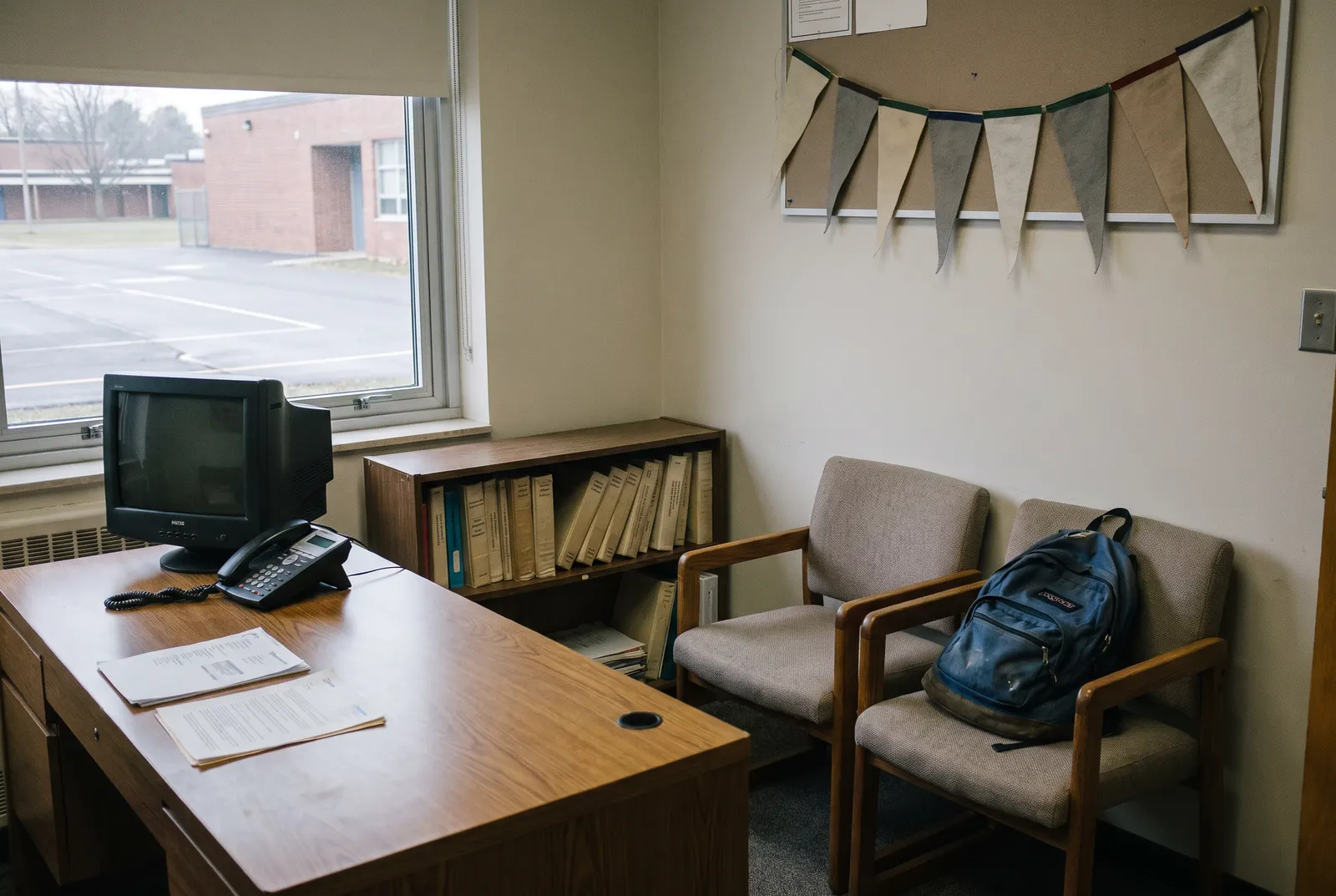 School Counselor SalarySchool and career counselors earn a $64,330 national median in May 2025 BLS data. Compare 10-month school schedules against 12-month LPC pay.
- Clinical Mental Health Counseling Programs by StatePrograms based in each state, with in-state rates and state pay.