
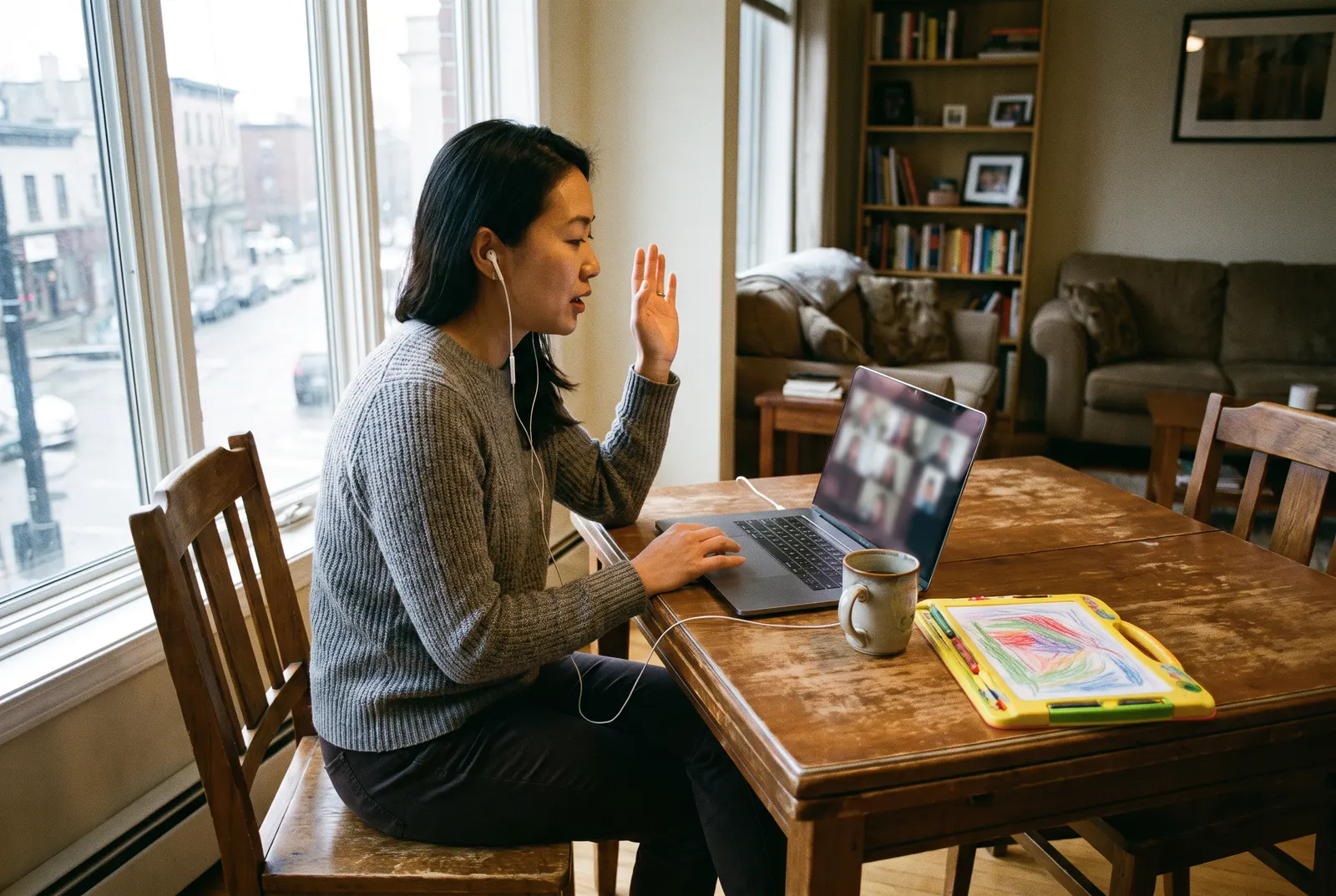
An online CMHC program and an on-campus one lead to the same license, because both have to meet the same CACREP standards and both send you to a local clinic for the same 700 supervised hours. What actually differs is how often you travel, when your classes meet, who finds your practicum site, and whether the school is allowed to enroll you from your state. In our directory of 57 programs, 54 are offered online, 2 are fully on campus and 1 is hybrid. Of the online group, 35 still require some campus travel and 19 don’t. So the real comparison is usually between three kinds of online program and a small number of campus options near you.
I’ve built this comparison from the directory’s own records: residency rules, schedules, tuition and the outcomes schools publish. Where online and campus programs come out the same, I say so.
How Do Online and On-Campus CMHC Programs Compare Side by Side?
Here is the short version, factor by factor, using the programs we track.
| Factor | Online programs | On-campus and hybrid programs |
|---|---|---|
| Share of the directory | 54 programs | 2 on campus, 1 hybrid |
| Campus travel | 35 require residencies or intensives; 19 require none | Weekly, for every class or for in-person sessions |
| Live class time | Varies from weekly Zoom seminars to fully synchronous courses | Set class nights, such as Fitchburg’s evening classes starting at 5 p.m. or later |
| Clinical hours | 700 in-person hours at a local site you help find | 700 in-person hours, usually at the school’s partner sites |
| State authorization | Must check; some programs exclude states | Rarely an issue if you live in the state |
| Lowest rate in the directory | $360 per credit (Lamar University) | $347 per credit (Fitchburg State University) |
| Median rate, all formats | $740 per credit | $740 per credit |
| License you qualify for | Same state license | Same state license |
Two rows on that table settle more than the rest. The clinical hours row means no format lets you skip in-person counseling. The license row means employers and boards see the same credential. Everything else is logistics, money and how much structure you want.
By the Numbers
- 57 Programs Ranked
- $740 Median Master's Cost per Credit
Source: School program pages, November 2026
Do Online CMHC Programs Really Require Campus Residencies?
Most do. The 2024 CACREP Standards don’t impose one universal residency rule, but they require live, synchronous evaluation of your counseling skills and professional dispositions, including at least one before practicum. Schools meet that requirement in very different ways, and the travel load ranges widely.
| Program | What the residency requirement looks like |
|---|---|
| Prescott College | One 3-day colloquium in Prescott, Arizona during the first year |
| New York University | One 3 to 4 day immersion in New York City in the summer of year one |
| William & Mary | Two 3-day residencies in Williamsburg, Virginia, in years one and two |
| Keiser University | Two residencies of two consecutive days each, which can be combined into one week |
| Lamar University | Two 5-day residency seminars in Beaumont, Texas |
| Regent University | Two week-long residencies in Virginia Beach, held in January and August, which can’t be waived |
| Palm Beach Atlantic University | Two week-long Graduate Intensive Residencies in West Palm Beach |
| Northwest University | Three 4-day residencies (Wednesday to Saturday) in Kirkland, Washington |
| University of Phoenix | Two residencies with 3 in-person days each in Phoenix, plus one with 3 synchronous online days |
| Walden University | Two pre-practicum labs, each with a 4-day intensive you can attend virtually or in person |
The difference between the top and bottom of that table is real money and real vacation days. One 3-day trip is a long weekend. Two week-long residencies at fixed times of year means planning time off from work twice, plus childcare, flights and a hotel. When I compare online programs, I count the residency days the way I’d count credits.
The fully online group handles skills checks over video. Oklahoma’s MCMHC program runs two weeklong virtual residencies online. At West Alabama, the CO 509 pre-practicum residency happens live on video. Holy Cross in New Orleans adds two one-day Zoom residencies starting fall 2026. You still travel nowhere, but you do have to be on camera at set times. Our 100% online CMHC programs list ranks the programs with no campus visits.
Residency rules also move. East Carolina, Grand View and Marymount all changed their requirements effective in 2026. A program that was fully online when a friend enrolled may not be now.
Are Online CMHC Classes Live or Self-Paced?
Fewer are self-paced than the word “online” suggests. Counseling is taught through role-play, group work and observed sessions, and those don’t translate well to recorded lectures. Many online programs mix recorded content with required live meetings, and some are live almost entirely.
Adler Graduate School teaches most of its classes synchronously over Zoom, starting at 6:15 p.m. Central time. Thomas University runs its program synchronously. The College of New Jersey requires a weekly 90-minute synchronous session in its online courses and a 10-hour experiential group session. Post University adds a weekly 2-hour live group supervision during its first clinical practicum. And the University of Mary meets once a week, either on its Bismarck campus or by video, which blurs the line between formats.
Time zones matter more than people expect. A 6:15 p.m. Central class starts at 4:15 p.m. on the West Coast, during a lot of people’s workday. Before you enroll, ask for the live session times of the courses in your first two terms and convert them to your zone.
On-campus programs answer the schedule question with a fixed timetable. Fitchburg State University holds its classes in the evening, none starting before 5 p.m., face to face, with a few courses offered online or hybrid. Mercer University meets in person one night a week in Atlanta and runs the rest online. If you live within driving distance, a one-night-a-week hybrid can cost you fewer vacation days than an online program with two week-long residencies across the country.
How Does the Classroom Experience Differ Online?
Skills training is where students worry most about online study, and the structure of the 2024 CACREP Standards answers part of that worry. Programs have to show they meet every standard in every delivery format they run, including the counseling skills training environment, the technology, client privacy protections and faculty qualifications. A program can’t run a thinner version of the skills sequence online and keep its accreditation for that track.
In practice, online skills courses look like this. You record or stream role-play sessions with a classmate, a faculty member watches live or reviews the recording, and you get scored on specific skills. Group counseling is usually where programs insist on live contact, either in a residency or a long synchronous block. Bradley runs COU 625 Group Counseling as synchronous coursework in the second half of its program, and Phoenix’s Residency II is three synchronous online days.
Campus students get something online students have to build on purpose: hallway time. Classmates who live in the same city trade tips about internship sites, study for the NCE together and later refer clients to each other. Online cohorts can do the same, but it takes more effort, and the people you meet are spread across states. If you go online, the residency weeks are where most of those relationships start, which is one argument for a program with at least some in-person contact.
Class size is worth asking about in either format. Thomas University caps its core classes at a 1:12 faculty-to-student ratio, a number you can compare across schools.
Who Finds Your Practicum Site in an Online Program?
In most online programs, you do much of the finding, with school approval. In campus programs, the department usually has standing agreements with local agencies and steers students toward them. This is the biggest practical difference between the formats, and it hits during the stretch of the degree when you have the least time.
Every CACREP program requires a 100-hour practicum with at least 40 direct client hours and a 600-hour internship with at least 240 direct client hours. Online students complete those hours in their own communities. The support varies. Marquette University says it offers faculty placement assistance for students in their own communities. Post University has a Field Placement Coordinator. University of Holy Cross runs the 100-hour practicum by telehealth through its own training center before you start a local 600-hour internship, which removes one site search. Some programs ask for more hours than the minimum. University of Western States requires 800 hours across five quarters, and Northwestern University lists a 200-hour practicum.
Our practicum and internship guide covers the hour rules and how to approach sites. For the format decision, the question to ask each online school is narrow: how many of last year’s students in your state found an approved site on time, and what happens to your graduation date if you don’t.
Why Does State Authorization Matter More for Online Programs?
A campus program enrolls you in its own state, so authorization rarely comes up. An online program enrolls students across state lines, and it has to be authorized to do that and has to tell you whether its curriculum meets your state’s licensure rules. Some programs limit where they’ll take students.
A few examples from the directory show the range. Palo Alto University requires applicants to live in an authorized state. North Carolina State University delivers coursework online but requires every student to complete practicum and internship inside North Carolina, which makes it a North Carolina program in practice. University of Phoenix notes that its degree isn’t open in every state. And Houston Christian University points to Texas regulations that require online counseling master’s programs operating in Texas to include some on-campus training, so students may need to travel to Houston.
The second layer is the license itself. A program can be authorized to enroll you and still fall short of your state’s coursework rules, which differ from state to state. Our LMHC, LPC, LCPC and LPCC guide covers how those rules differ. Ask for the school’s written licensure disclosure for your state, and if you might move, ask about the state you might move to as well. The Counseling Compact may make the move easier later, but it requires a full independent license in your home state first.
Related Rankings
- Best Online CMHC ProgramsOnline clinical mental health counseling master's programs ranked by real per-credit cost, CACREP accreditation, residencies, and outcomes.
- 100% Online CMHC ProgramsClinical mental health counseling master's degrees with zero campus travel requirements, ranked on cost, CACREP status, and outcomes.
- Best CMHC Master's ProgramsCompare accredited clinical mental health counseling master's programs ranked on cost, earnings, completion, CACREP status, and flexibility.
- Online CMHC for Working AdultsFlexible online clinical mental health counseling master's degrees designed around full-time work schedules, evening sessions, and multiple starts.
Is an Online Counseling Degree Cheaper Than an On-Campus One?
Not by default. The lowest rate in our directory belongs to an on-campus program, Fitchburg State at $347 per credit for a $20,820 total. Lamar University’s online program is close behind at $360 per credit and $21,600 total, and it includes distance learning and university fees in that rate. Mercer’s hybrid program costs $753 per credit, about the $740 median across all formats.
| Program | Format | Rate | Total tuition |
|---|---|---|---|
| Fitchburg State University | On campus, evenings | $347 per credit | $20,820 |
| Lamar University | Online, two 5-day residencies | $360 per credit | $21,600 |
| University of West Alabama | Fully online | $429 per credit | $25,740 |
| Mercer University | Hybrid, one night a week | $753 per credit | $45,180 |
| Adler Graduate School | Fully online, live evening classes | $779 per credit | $46,740 |
| Regent University | Online, two week-long residencies | $730 per credit | $43,800 |
| Yeshiva University | Fully online | $1,745 per credit | $104,700 |
Where online saves money is around the tuition. You don’t move, you can keep a full-time job through most of the coursework, and you don’t pay campus parking or commuting. Residency travel pushes the other way. Bradley University lists residency lodging, meals and transportation under its additional counseling fees, and Walden charges $1,450 per pre-practicum lab virtually or $1,550 in person, with travel extra for the in-person version.
Public online programs bring back the in-state versus out-of-state question. East Carolina University charges $277.06 per credit in state and $1,044.06 out of state, and North Carolina Central charges $299.23 against $1,038.57. If you live in a state with a public online program, that’s usually where the lowest total is. Our funding guide covers how federal loan limits apply, and the cheapest online CMHC programs list sorts by price.
Do Online CMHC Graduates Pass Licensure Exams at the Same Rate?
The outcomes schools publish suggest format isn’t the deciding factor. Several online programs in the directory report strong results, and the one hybrid program posts a strong result on the exam it reports.
| Program | Format | Published outcome |
|---|---|---|
| Commonwealth University of Pennsylvania | Fully online | 91.5% NCE pass rate and 65% job placement (2024 to 2025) |
| Grace College | Online with annual residency | 92% NCE and licensure pass rate |
| John Carroll University | Online with two weekend residencies | 97% state licensure exam pass rate and 100% employment within six months (2024) |
| LeTourneau University | Online with residency | 97% NCE pass rate and 95% graduate placement |
| Marymount University | Online with live assessments | 100% NCE pass rate for 2024 CMHC graduates |
| The Chicago School at Los Angeles | Online with residencies | 91% licensure exam pass rate and 76.9% job placement within one year |
| Mercer University | Hybrid | 95% first-time pass rate on the CPCE (2023) |
Read these with care. Each school picks its own measure and year, cohort sizes differ, and the CPCE is an exit exam taken during the program, which isn’t the licensing exam. CACREP programs publish an annual outcomes report, which is the best place to compare programs on the same footing. Ask for it.
What these numbers do show is that a well-run online program can produce the same exam results as any other. The variable that matters is the program, so judge each on its own report.
Which Format Fits Which Kind of Student?
Online fits you best if you need to keep a full-time job, live far from any campus program, or can’t relocate. It also fits if you can get to a residency a few times over the degree and have a realistic plan for finding a local practicum site. Programs with live evening classes help working adults stay on schedule. Our online CMHC programs for working adults list leans on exactly that.
On campus or hybrid fits better if a program is within driving distance and you want the department to handle placement relationships, or if you learn counseling skills best in a room with classmates. Campus programs also make graduate assistantships easier to find, since those jobs are on campus. The catch is that there are very few campus programs in our directory, so for many readers the campus option depends on what’s nearby.
The middle ground is underrated. A hybrid like Mercer’s one night a week, or a blended program like the University of Mary’s, gives you in-person contact without a full campus schedule. And a fully online program with live classes can feel closer to a campus program than an asynchronous one with two residencies.
What Should You Ask Before Choosing a Format?
Before you commit, get written answers to a short list. How many campus days does the program require in total, and in which months? What are the live session times for the first year, in your time zone? Who finds the practicum site, and what share of students in your state placed on time last year? Is your state authorized, and does the curriculum meet your state’s licensure rules? What is the full cost, including residency travel and fees?
If two programs answer those well, choose on outcomes and price. Start with our best online CMHC programs and best CMHC programs rankings, and use how to choose a CMHC program for the accreditation and specialty checks that apply to every format.
Frequently Asked Questions
Is an Online CMHC Degree Respected as Much as an On-Campus One?
Do Online Counseling Programs Require Campus Visits?
Are Online CMHC Classes Live or Self-Paced?
Can I Do an Online Counseling Program From Any State?
Are On-Campus Counseling Programs Cheaper Than Online Ones?
Keep Reading
 How to Choose a CMHC ProgramYou can compare CMHC master's programs on CACREP status, real per-credit tuition, campus travel, and state licensure rules before applying.
 Practicum & Internship GuideCACREP requires 700 clinical hours across practicum and internship. Learn direct hour rules, supervision limits, and how to land a local site.
 Paying for a Counseling Master'sFederal grad loans now stop at $20,500 a year with Grad PLUS gone. How to pay for a counseling master's with PSLF, NHSC repayment and employer aid.
- How We Rank ProgramsThe seven factors, their weights and the data behind each score.
Sources
7 references
- 2024 CACREP Standards
- Introduction to the 2024 CACREP Standards
- 2024 CACREP Standards, Section 4 (Professional Practice)
- Commonwealth University of Pennsylvania Clinical Mental Health Counseling outcomes
- Mercer University Clinical Mental Health Counseling
- Counseling Compact FAQ
- Occupational Employment and Wage Statistics (May 2025)
All sources retrieved .